These pages give an overview of the history of prepress from 1984 onwards. For a more elaborate list of events, click on one of the years in the lists below. This allows you to go back to the days when phototypesetting took off and machines from Compugraphic, Berthold or Scangraphic ruled the industry. If you are in a hurry or just want to enjoy the pictures, watch the visual guide to prepress. Enjoy your visit to this virtual prepress museum. Don’t forget to also visit the pages about the history of printing.
The eighties: desktop publishing takes over
In the early 80s many of the technologies that are still in use today first appear on the market. IBM launches its Personal Computer. The Apple Lisa offers a first glimpse at the graphical user interface that will later be made popular by the Macintosh.
In 1985 the Apple LaserWriter and Aldus PageMaker are thrown in the mix and the desktop publishing revolution can start. A designer now has the possibility to create a full-page design using standard computers and off-the-shelf software. Linotype’s Linotronic assures high-quality output on film or paper. Pretty soon other publishing applications appear for both Mac and PC, closely followed by drawing programs such as Illustrator and freehand. Larger screens, faster networking and improved support for peripherals through standards such as SCSI make sure the market matures rapidly.
Artistically the new found freedom often leads to pages that contain at least a dozen different fonts in two or three different typefaces, mixed with fairly low-resolution graphics.
Some of the highlights of the decade:
1980: The Ethernet specifications are published.
1981: The IBM PC legitimizes personal computers in the business market.
1982: Adobe is founded, Sony releases its first Trinitron monitor, Sun is incorporated.
1983: The Apple Lisa introduces the graphical user interface and mouse, Creo is incorporated.
1984: The Apple Macintosh is launched, Adobe releases PostScript, Linotype introduces the Linotronic 300 imagesetter.

1985: The Apple LaserWriter and Aldus PageMaker start the desktop publishing revolution.

1986: Ventura Publisher appears on PC, Apple ships the Macintosh Plus, Radius makes the first Full Page Display.
1987: Quark launches QuarkXPress 1.0, Adobe Illustrator 1.0 ships, Linotype starts making PostScript typefaces.
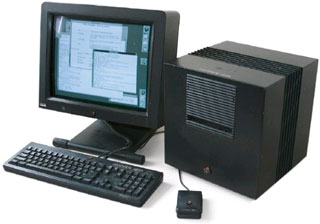
1988: NeXT starts selling the NeXTcube, Aldus releases FreeHand 1.0.
1989: Helios EtherShare is shown, CorelDRAW 1.0 ships.
The nineties: the big wars are fought
Once desktop publishing becomes an established phenomenon, a few battles are fought over some of its fundamentals.
- Traditional prepress vendors such as Crossfield, Scitex and Dainippon-Screen hope to maintain their lead by using their expensive systems to put the final touches to designs created on Mac. Aldus has already developed a technology called OPI to facilitate such workflows. Things turn out differently as Macs and networks within a few years become powerful enough to handle large files. CEPS systems quickly disappear off the market.
- One of the traditional weaknesses of PostScript level 1 is its screening technology which isn’t really suitable for 4-color jobs. In the screening wars, vendors like Linotype-Hell and Agfa try to win sales by offering improved or radically new screening technologies such as stochastic screening.
- In the early nineties Adobe, Apple, and Microsoft also fight over file formats. Adobe loses its absolute control over font formats but manages to maintain PostScript as the standard page description language.
In the early nineties, the imagesetter market gradually moves from small 1-up devices to larger systems that are capable of imaging an entire press sheet. In the second half of the decade, computer-to-plate technology starts taking over but it follows a different pattern: first the 8-up (B1) market moves to CtP, then the even larger VLF (very large format) systems while smaller systems only become popular in the first half of the new millennium.
Weak Apple management and the continuous efforts of Microsoft make PC’s an acceptable alternative to Macs in the second half of the nineties. A lot of back-end processes migrate to the PC platforms, including most of the workflow systems that now enter the market. The resurrection of Apple in 1998 makes a lot of designers stick to their Macs for the creative side of things.
The enhanced power of hard- and software leads to more sophisticated designs. The wild typography of some designs is no longer due to a lack of artistic insight but inspired by the grunge movement. Easy to achieve effects, such as blends in QuarkXPress 2, occasionally still take the design world by storm.
Some of the highlights of the decade:
1990: The Mac IIfx sets new speed records, Microsoft introduces Windows 3.0, Illustrator 3.0 ships, HQS screening gets rid of moiré.

1991: Apple and Microsoft teamed up to launch TrueType, Adobe releases PostScript level 2, Photoshop 1.07 adds support for CMYK, the Fiery RIP for digital copiers is EFI’s first product, the Heidelberg GTO-DI supports direct imaging technology.
1992: PDF 1.0 wins the ‘best of Comdex’ award, Apple ships the Quadra 950, Photo CD has its 15 minutes of fame, Artwork Systems is founded.
1993: Screen launches TaigaSPACE, Agfa introduces Cristalraster, baby drum scanners hit the market, digital presses like the Indigo E-Print 100 (see below) and Xeikon DCP-1 storm the market, Windows NT is ready to take on Unix, ICC is founded, IT8 test charts appear.
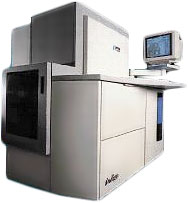
1994: Adobe Systems and Aldus Corporation merge, Creo introduces the 3244 platesetter, Iomega launches the ZIP-drive, Photoshop 3.0 adds support for layers.
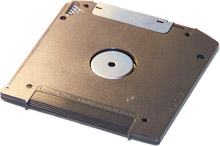
1995: The TrendSetter is Creo’s first thermal CtP system, Microsoft introduces Windows 95, Apple allows Mac clones, connectivity standards such as FireWire, USB and Fast Ethernet appear, dye-sub printers are popular for page proofing.
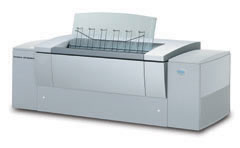
1996: Adobe and Microsoft announce OpenType, QuarkXPress 3.3 ships, Scitex releases Brisque

1997: Enfoucs starts shipping PitStop 1.0, the Eskofot EskoScan 2540 dominates the market of copydot scanners, Mac OS 8 ships, this site appears on the internet.

1998: The iMac becomes an instant classic, PostScript 3 is announced, Barco acquires Gerber Systems, Agfa announces the first PDF-based workflow system, Barco acquires Gerber Systems.
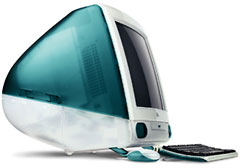
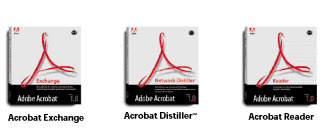
1999: Adobe launches both Acrobat 4 and InDesign 1.0, Heidelberg and Creo announce Prinergy, PDF 1.3 is the first PDF version that is really suitable for prepress.
The new millenium: business over technology
The new millennium isn’t as much about technology as it is about business.
There are some interesting technical trends such as the increased adoption of PDF as an exchange format and Adobe’s move to capture the entire content creation market. Process-free technology becomes widely adopted for CtP system.
The majority of changes however are business oriented: the move to CTP kills many of the remaining trade shops, the internet starts having a negative impact on some markets, increased competition forces some printing companies out of business while others merge. Many vendors actually go through the same merger frenzy.
Some of the highlights of the decade:
2000: Adobe adds support for transparency in Illustrator 9, Creo and Scitex merge, Screen introduces Trueflow, lots of violet CtP systems are launched at Drupa, the Millenium crash never happens.
2001: Apple launches the first desktop version of OS X while Microsoft goes for Windows XP, Agfa buys Autologic.
2002: Creo acquires ScenicSoft, Barco Graphics and Purup Eskofot merge.
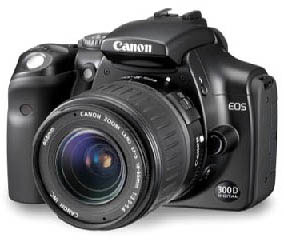
2003: Adobe launches its Creative Suite software suite, the Canon 300D changes the camera market, Barco exits from the graphics market.
2004: JDF 1.2 gets a lot of attentiona at Drupa, basysPrint is acquired by Punch International, Agfa introduces its first chemistry-free CtP plate.

2005: Kodak takes over Creo, Adobe acquires Macromedia, QuarkXPress 7 shows that Quark can still innovate its product, Epson’s K3 Ultrachrome inks and matching Stylus Pro printers are launched.
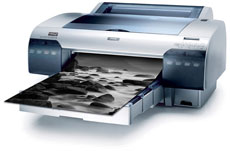
2006: Microsoft launches XPS, Adobe announces the Adobe PDF Print Engine, Apple releases its first Intel-based workstations.
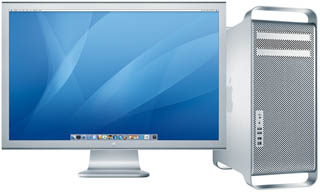
2007: Adobe discontinues FreeHand, Esko and Artwork Systems merge, Fuji starts shipping its XMF workflow, PDF 1.7 becomes an ISO-standard.
2008: At drupa 2008 the focus lies on fast inkjet printers, ‘Sustainability’ and ‘Go green’ are the hype of the year, Acrobat 9 is nice but CS4 doesn’t sell that well.
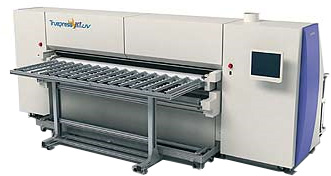
2009: Due to the financial crises, many printing companies and suppliers go for pay cuts, partial unemployment or layoffs.
The twenty-tens: the shift to inkjet
Increasingly the focus of printers and vendors shifts from offset printing to digital solutions. The large format printing market expands tremendously. In the prepress software market, Adobe is the first to switch to a subscription model. Many other software vendors follow its lead and even traditional press vendors turn to such business models. Another focus point is cloud-based solutions.
Some of the highlights of the decade:
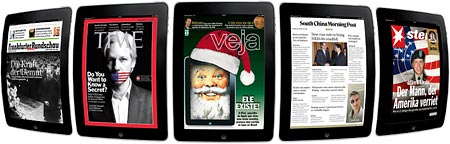
2010: The newly introduced Apple iPad tablet is heralded as a ‘magazine-killer’, Adobe Creative Suite 5 is a bestseller.
2011: In the USA employment in advertising and graphic design for the first time ever exceeds that in commercial printing, Steve Jobs passes away, layout solutions improve their support for creating tablet editions of publications.
2012: At drupa Benny Landa introduces the Landa nanographic printing press, which will not ship for another six years. EFI starts acquiring MIS vendors. Adobe shifts to a subscription model for its Creative Cloud software suite.
2013: Hybrid Software launches PACKZ, the JDF 1.5 standard is released.
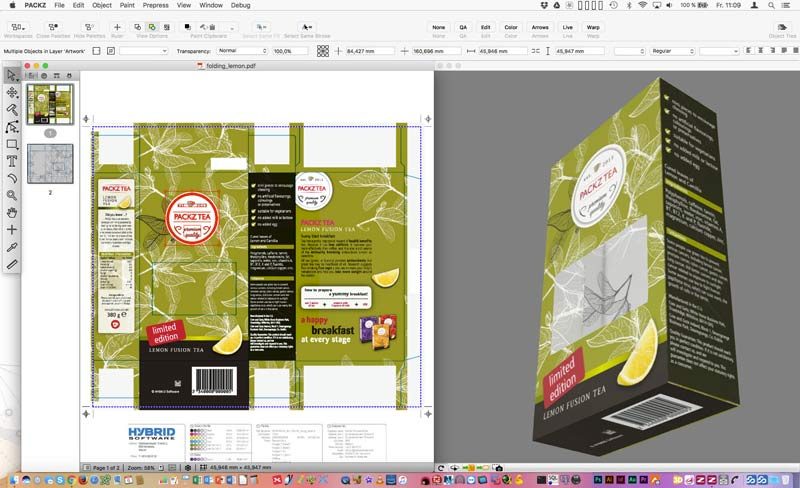
2014: Vistaprint acquires three other web-to-print businesses. The Ipex trade show is much smaller than previous editions. 4K monitors become affordable.
2015: Vistaprint and EFI continue their growth by acquiring other companies.
2016: The Bank of England issues its first polymer banknote. PrintOS, shown below, is HP’s first cloud-based workflow solution. Digital embellishing and finishing equipment is all the rage at the drupa trade show. OpenType Font Variations add more flexibility to typefaces.
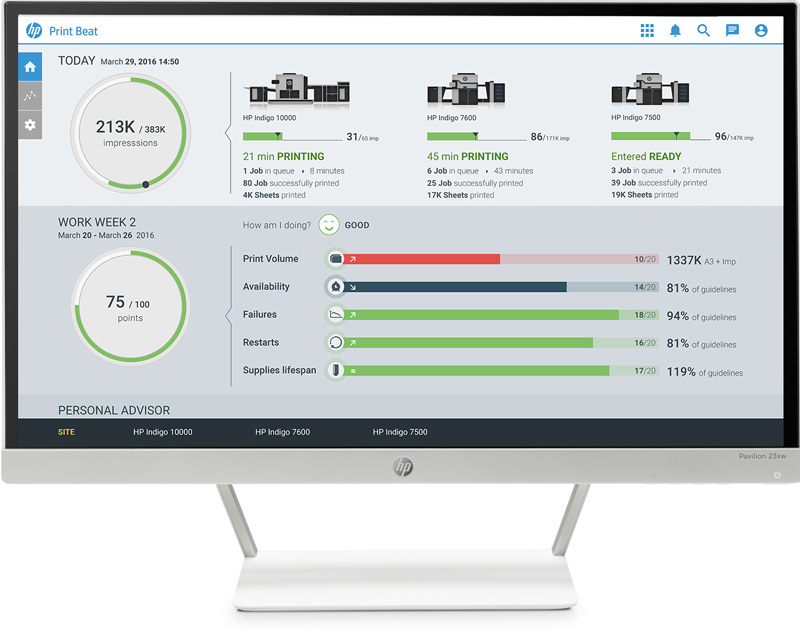
2017: Fiery FS300 Pro is a major update of the EFI digital frontend software. PDF 2.0 is launched, offering separate output intents per page, more consistent transparency handling, better encryption and a slew of other features.
2018: Version 2 of the XJDF protocol to exchange information between applications and production systems is published. Fujifilm attempts to take over Xerox.
2019: Miraclon takes over Kodak’s flexographic business. The first Landa presses are installed.
Notably, Fontographer preceded Illustrator (by a few months, at least) as the first vector-drawing application for the Mac.
Great abbreviated history! I lived through so much of it. Table stripping from line-art photos, Mac Quadra, (which I found to be completely unreliable. Only one guy in the shop could work on that thing and not have it crash constantly!) Silicon Graphics “Contex” and “Conceps” machines where I cut my teeth in the digital world, and eventually all Mac all the time. I turned into “that guy” with a G4 that no one else could even get to turn on. I loved it! It wasn’t the fastest but it would do what I wanted it to do every time!)
Now things that once could only be done on a half a million dollar system can be done on our phone!
Brings back memories., I worked for Desert Media Group in Las Vegas, NV (Las Vegas Today and Tourguide of Las Vegas) back in 1995. I was actually helping deliver magazines the day the Oklahoma bombing happened. I started with them because I wanted to go to Comdex, so I got on my ham radio.. met one of the owners. They were a complete service bureau. My job was to watch film all night long on the image setter for the plates. We had the 3M Rainbow also. complete stripping station across the way, all the equipment.. Macs, Quadra 950’s, the 8100 110mhz running the RIP. I learned to strip back then. Brings back memories.
I was a ‘Stripper’ back in the day. My Daughter gets a kick out of that….
Awesome to hear from other folks that traveled the same time travels! I started in 1973 when film was shot on big cameras, assembled on light tables and plated. these days, i assemble everything, including variable data, on the PC and print on a digital Xerox Press. Came thru all the Scitex, MacIntosh, Indigo, Kodak workflows and kinda miss some of them.
Best replacement for Kenex?
I’ve spent 15 years in printing prepress. I’m now using my Photoshop, Illustrator, Indesign and color knoledge in a different field of retail decor manufacture. We are a large user of wide format and direct to substrate printing equipment. So the world of printing prepress applies here very much.
Kenex MTM system was mentioned above. Old users of this system know it is antiquated. Users also know it was so good at what it did, it didn’t matter what it looked like. It just was so good at gathering all the relevant data in a company to organize and cross reference it.
Now I’m in a semi different field, we have been using a debacle of a MTM system that I won’t even go into its perils. Even though, I don’t work in a prepress shop anymore, the Kenex system would be perfect for the manufacturing environment I am working in. Since Kenex is no longer in business, there MUST be a good suitable replacement, right?
I looked at PrintSmith, but it is so specific to a printing company with printing presses, paper sizes, bindery, etc that it would just not fit a company with all the different departments we have. Here’s a list: Project Management, Estimating, Design, Prepress/ Product Development, Digital Imaging, CNC Router, Carpentry, Metalwork, Paint, Final Assembly, Crating/ Shipping.
I could see the Kenex system keeping the data from all these departments organized and cross referenced very well.
Can anyone help me with the top 10 global companies in pre press consumable market. Also for US, Germany, China and Japan if possible.
This has to be very useful for me. Who knows where technology of prepress will develop in the next 5-10 years from now but it is good to know history.
I started on a Pressleader 5000 and Tandberg to typeset text which was sent to Linotype 300 imagesetter to go on bromide which was then pasted onto the page – the codes we used were: upward arrow to open the code; s (single column); 1 (Times regular)followed by ] to close the code – as it was for newspaper we only had the one typeface. By the end myself and a colleague had worked out how to take the bromide back to give single column typing in a double column ad and to roll it back again to give a fancy border – the code was fairly long for that. Then in 1986 I started on a Mac Plus. I still have copies of the first versions of Illustrator and Freehand that I used and the whole program fits on an old floppy disk and in 1989 I went onto Quark. It’s amazing how far the technology has come since then as I can also remember 4 colour planning, contacts, cromalins and so on.
I would like to use this as a resource for a prepress class I instruct with your permission. Red River College WPG, MB.
It is perfect for the history component.
Please advise, thx.
Wade
It is difficult to comment without knowing what ‘use’ means.
– If it means that you’ll refer students to these pages, that is obviously fine. The more visitors, the merrier.
– If you intend to reuse content in your training material, a reference to the original source would be appreciated.
– I will take action when people copy content to their own web site.
It became very useful to me. Thanks for great information.
im a graphic design student and this has been so helpful. thanks!
Graphic Arts Systems: R.I.P. Burbank, CA from 1972 to 1997.
Was one of the first shops to have a laser drum scanner, Scitex Pixet (Imager I/II/III), Scitex Assemblers, etc.
A company in 1992 that reverse engineered the Scitex CT format for reading/writing on the Macintosh (FotoFetch). With help from a programmer Al Ciplikas. Also made a system to convert Scitex 9 Track Tapes to Exabyte or DAT tapes and interfaced with the Kenex MTM system for tracking of images.
Added a design company (Design Fusion) in the early 1990’s. Was ahead of it’s time.
Eventually run into the ground by one of the owner’s kids (JA).
At it’s biggest, had over 100 employees.
hey!
I found the history of a prepress firm.
Gives the development, till date.
http://www.alden.co.in/profile.html
Ah the good/bad old days
Compugraphic built a headliner called the 7200 – the lens turret enabled a bunch of sizes up to 72 point. Larger newspapers would buy a modified machine that could set 120 point as I recall.
The Mark II (not right name) had to be build with a lead splash skirt so that it passed CSA regulations for typesetting equipment way back then. It was humorous because, of course, it was a cold type machine.
Glad someone remembers Scitex! It was an Israeli company at which I worked in the mid-1980s. I remember being thrilled when I went for training on their $500,000 scanner and being able to change the color of someone’s eyes in a photo. Little did we know that in a decade, people would be able to do that on a desktop computer on a $50 piece of equipment :->
I remember the change from doing all the make up on a light table, we were called combiners here in Australia. We would make all the traps by hand, use clear film to patch image separation up on, rubylith, liquid opaque and red paper for masking. Our tool box would have brushes, scalpels, snap off blades and high and low registration pins or pin bars.
There are still some things that can be done on the bench by hand that are unattainable today. Very few prepress people today have seen film sepparations or any of the interesting proofing methods that were available before CTP and digital proofing came to town.
How the world of prepress has changed. Here in Australia it was thought that the prepress operator or prepress in general could be done away with. How fare from the truth that is.
Very interesting article! Amazing how far we have come in a few short decades. 20 years from now we will be the history discussion points of print technologies of the past? Can’t wait to see!
I graduated HS in 1985 (PostScript), and graduated from RIT in 1989. My first job was as a mechanical artist for a large typesetter – Rochester Monotype. I would set and output and graphics from my super fast Mac IIci with PageMaker (RageMaker) or Illustrator 88 to a Linotype L300 imagesetter on RC paper and paste-up (wax) everything up to a board, which would be shot in our camera department to a negative. We also had a second L300 with film. We would output a lot of spot color film negatives that were stripped into conventional film by strippers.
The company had invested seven figures in a Bedford phototypesetting system, and were in the throws of how to maintain both systems – Mac/Lino and Bedford.
I later went to two prepress companies that were heavily invested in Scitex and Hell equipment (Primax, Prisma, Assembler, magnetic tapes, Dolev 200, 800, Hell drum scanners) and struggling with the same paradigm changes with DTP.
It’s been a wild ride for this electronic prepress industry for the last 25 years, for sure.
Dear Laurens,
If I may add a bit to your history of prepress..
Before the desktop revolution there was the photosetting revolution, when the ‘hot typesetting’ was replaced by the ‘cold typesetting’. That is, when lead type was replaced by type set in photographic film.
I happened to work in a newspaper that used a photosetting system that could be used as well to fit information in layouts set by commands similar to those of Latex or HTML. It was mad by ATEX company and it lasted about ten years until we moved, very slowly to the desktop revolution with Win 3.11 (Workgroup) and Quark 3.12 for Windows (yes, we were a risk-taking wild bunch).
I remember first making the layouts by hand with the typometre and with my pencils and then typesettings the texts with orders like /dm0,1,9,9,9.9,10p/ (Set roman mode to font number 1 in this system (Times New Roman), body 9 points, width 9 points, leading 9.9 points, width 10 picas/… then, the resulting photographic paper was waxed to the strip base by our strippers (hairy middle-aged guys, don’t think otherwise) together with high contrast-screened copies of the pictures.
Those pages were then photosetted as individual offset plates (for the newspaper) and positioned in the roll web.
I remember the first keyboards we used were about 5-7 cm. thick (not joking) and you could kill a cow by breaking its skull if you hit its head with them.
There was a set of mainframes that could be brought to their knees if everybody hit the ‘H&J’ key at roughly the same time (“System is falling down, System is falling down!!!” was the editorial room yell.).
This system, that needed quite a throung of people to make a newspaper, was nonetheless much cheaper than the preceding ones, using ‘hot type’.
That laste more or less until 1994 or so around here (Madrid, Spain).
Yours, Gustavo
@Gustavo: it is really enthusiastic to listen and to learn from old stories. it is as if I am traveling from time. Kudos from sharing it was us, I hope to listen more from you 🙂
That was very interesting.
Thanks 😛
Brilliant! . . .
Very engaging and one of the shortest introduction to modern Prepress history events, I have ever read. Every graphic design student needs it.
Regards!
Scitex started the “desktop revolution” with the Pixet work station in 1982. I was one of the first to operate one for Graphic Arts Systems (Burbank, CA). We did not only photo retouching but page layout as well and output film on the ‘Erray” ouput (up to 30 x 40″ film size). The system incorporated HP 600mg Hard Drives for each workstation.
CIPC was before the Pixet. ELP was before the ERAY. Imager and Imager II with the trackball and zoom wheel and dynamic keypad. Those stations rocked. Imager 3 with adjustable slant digitizing tablet, build in viewing box. 9 track half inch reel to reel tape drives. AMPEX disc drives as big as washing machines. The Scitex Response 300 series with a skilled op can still crush any DTP system. R280 series even more prehistoric. Scitex invented stuff most people couldn’t even dream of.
Nobody yet can do interactive TRNSCOL or make a good High res LW 2540 dpi with CT 300 dpi. masking on DTP sucks.
I started in printing in 1960 with lead composition, went into camera, conventional color separation and stripping. Got into Scitex Pixet and Imager II in 1986. Loved swapping out Barco monitors and huge disk drives. Wace Phoenix had one of the largest Scitex installations, 2 Pixets, 2 Imagers, 14 disks, Eray, Raystar, and Dolevs. We upgraded to 3 Prismaxes and 2 Prismas and went from tape to optical disks. In 1995 we went to MAC 9500s and dropped Scitex. I’ve worked on Intel MACs and PCs feeding files to digital presses. Things HAVE changed since Linotype and Ludlow.
That was a great trip down memory lane. Thanks. Unfortunately I’m old enough to remember it all happening. Ha!
Hi folks,
Neat library page. I forgot all about aldus which was a blast from the past. I once had a pre-press manager who used to curse computers and rave about the simplicity of lead plates. Alot of innovation in the last century so thanks for the trip.
kind regards,
Ron